Taking the bike on V/Line
The adventure starts at the train station!
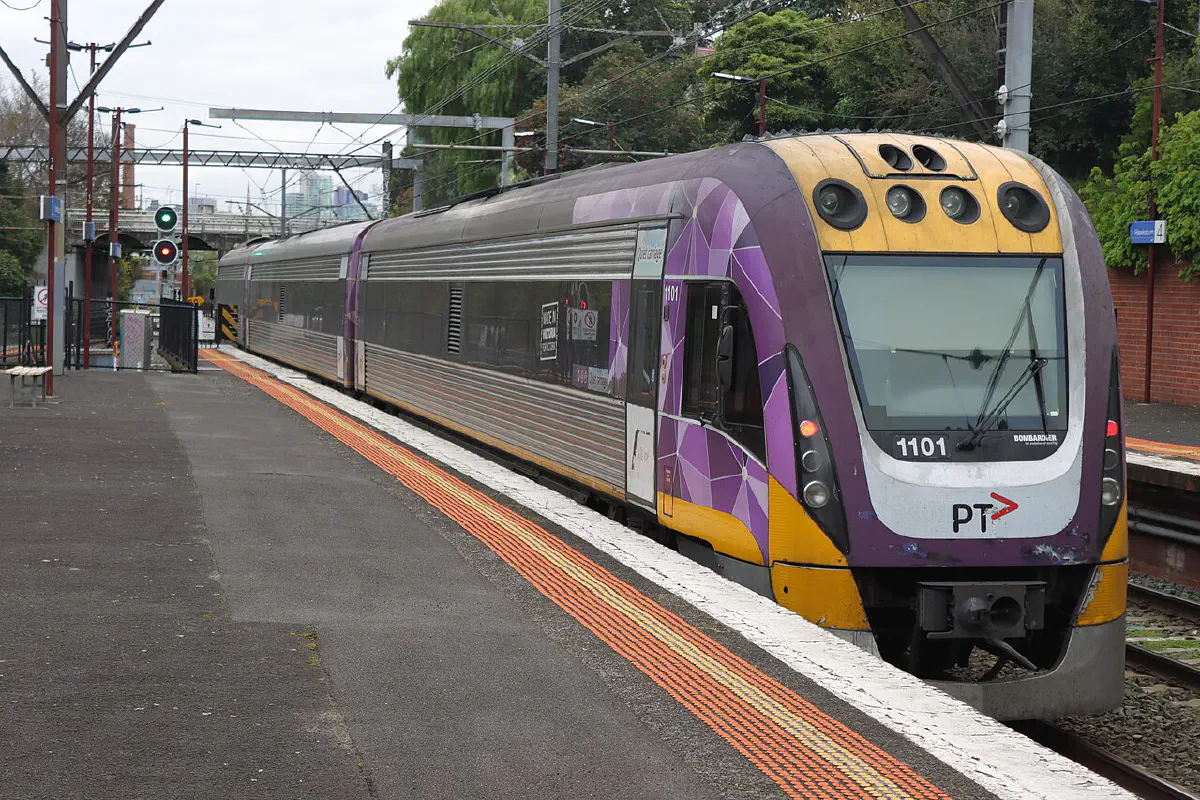
The best part of travelling throughout Victoria on our regional public transport network — called V/Line — is that your adventure begins at the train station, before you even start pedalling!
It is important to begin this article by declaring, with hand on heart, that most V/Line employees, the conductors and customer service staff, are the most genuine, warm and friendly people you’re ever likely to meet on a public transit system. The network has a lot of problems, which creates a lot of disgruntled, angry passengers, but the staff take it all with friendly aplomb. The guys who run the show? They can get stuffed… Anyway, the point if this article is to walk one through my experiences and knowledge so far on taking the train within Victoria.
Bikes on V/Line
All V/Line train services accept bikes on board. Coaches are a different story: if a scheduled regular coach service you will struggle, and may need to employ your best smile and clean bike when dealing with the bus driver. If a replacement coach service (which V/Line utilises far too regularly) you will generally fare better, particularly if it’s a last-minute replacement. That said, I have found myself rolling on my own two wheels for “coach replaced” legs in the past.
Once you’ve got to the station and your train is still a train, and you’re ready to board, what then?
V/Locity trains
V/Locity
trains are the newest trains in the fleet, although some are quite old now. There are different models, with different storage spaces for bikes. They are three carriages each, and often couple two together to form a six-carriage service.
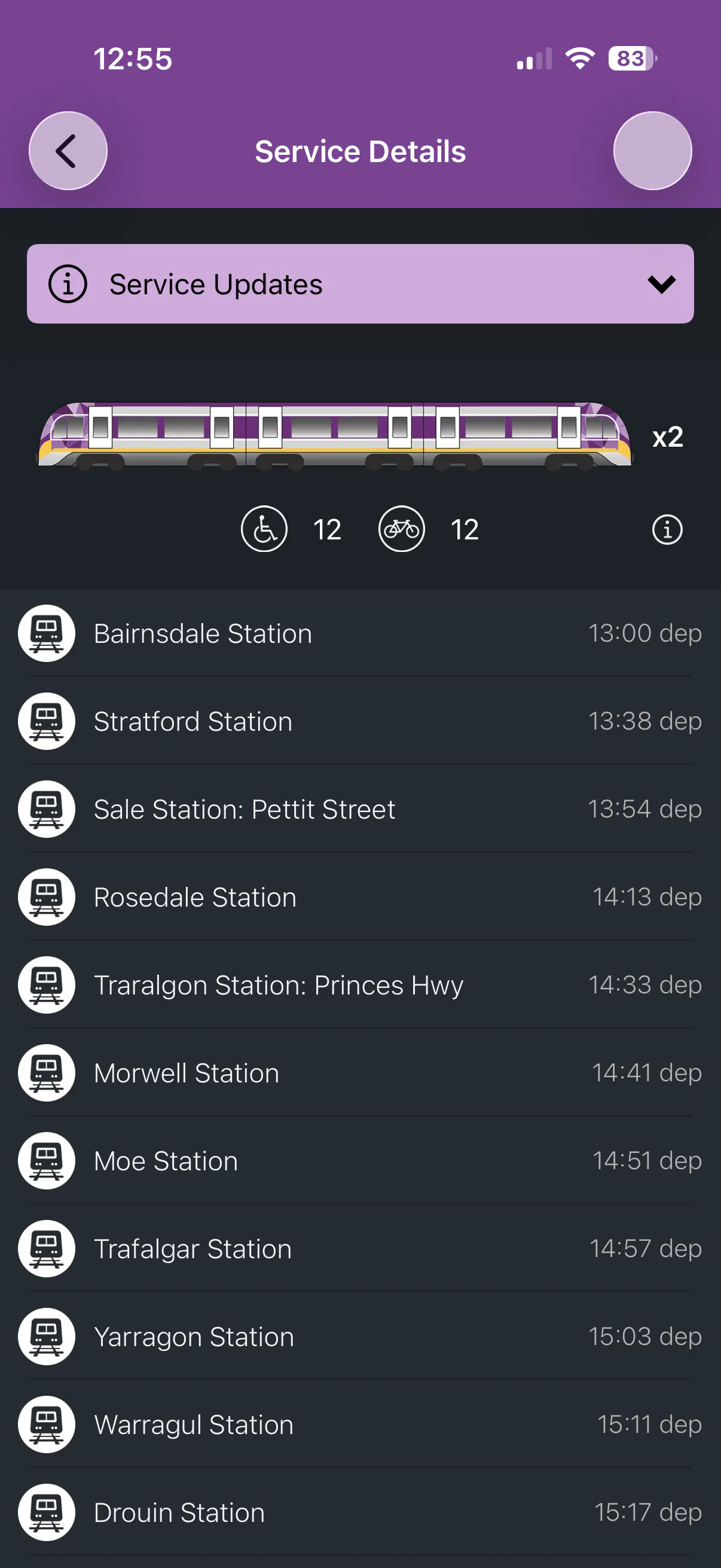
Tip: You can generally see on the V/Line app which trains have how many bikes/wheelchairs/carriages just before the train is set to depart (the “Next 5” feature, i.e. when they know what train they’re dedicating to that service)
Units 76–79 (VR76–VR79)
These models do not have dedicated bike spaces and should be avoided where possible. The spaces were removed for extra seats.
They operate mainly on the heavy traffic Geelong and Ballarat lines, though on the Ballarat Line these normally terminate at Melton or Bacchus Marsh.
All other units
The other units have six spaces, which when coupled with another set makes 12. Of course, many people also stow their luggage, prams, walkers, and so on in these spaces so it’s best to arrive at the station early.
As you can see above, it’s important to get the right carriage if and when booking a seat so you can be near your bike. I’ve never had a problem before but it’s quite easy for someone to just walk off the train with your bicycle: nobody will stop them. There are bars for luggage directly over the handlebar height so you could chain/cable it to the handlebars to deter casual theft.
Most carriages run A, B, C and D, E, F — meaning B and E would be right — but this isn’t always reliable: I am currently writing this post in front of my bike on carriage D. Your best bet is to ask at the ticket counter which carriage is the bike storage on.
Sprinter trains
The Sprinter trains are mainly used on the Seymour line, and were replaced on other lines by V/Locity. They’re quite old now and have no bike storage. I have successfully travelled home on a Sprinter from Tullarook but I was in the disabled seating area, and if a disabled person had boarded I would have needed to disembark.
N-Set trains
These are — despite their age and lack of some other amenities on the newer trains — the best of the lot for us bike tourists. A dedicated luggage area where the conductor sits and keeps an eye on your bikes, with plenty of storage and space for bikes. These trains are mainly used on the Swan Hill line.
Other bikes
I always speak to other bike-carrying passengers when boarding to determine who’s getting off first, and then try to put their bike on the outside, so that when the train arrives at the stop, I don’t have to keep removing my bike to let them out. It’s always a good way to lessen the stress and be able to just sit back and relax until your stop.
I’ve noticed that around holiday times, on lines that connect to well-known rail trails and routes such as the Bairnsdale service1, there is a lot of bike touring traffic at these times and you may sometimes find yourself having to wait for the next train, which in these remote towns means tomorrow. Get to the station early and always strike up a friendly chat with the staff or conductors.
Turning your V/Line trip into a good one
Like I said above, there are lots of problems with the regional train network in Victoria. There are some good points though that I believe make travelling on the train a valid and even preferred mode of getting to the trailhead/departure point of your next adventure:
It’s cheap
At the moment in Victoria, public transport ticket prices are very cheap: as I write this, I am travelling from Ballarat to Bairnsdale, a 400km+ journey that takes 4 1⁄2 hours by car, for $4. The can of Coke I bought at the station waiting for my train cost more than that.
The staff
If you’re flexible, friendly and open with the staff, they’ll most times help you get where you need to go.
More relaxing than driving
It’s obvious from reading my entire blog I don’t enjoy driving2, the best part of taking the train is being able to sit here writing blog posts instead of dodging motorised dickheads.
Did I mention that it’s cheap? 🤣 Those same motorised dickheads are paying nearly $3 a litre right now…
The Bairnsdale line connects tourers to the East Gippsland Rail Trail one of — if not the best — rail trails in Victoria. ↩︎
At the moment I do not even own a motor vehicle. ↩︎
Attributions
The following works, images or designs were not created by me: